Friday, September 2, 2011

Living in the Question

Some Critical Uncertainties of the Era

"A ball of confusion/that's what the world is today!"  So exclaimed The Temptations four decades ago and things haven't changed that much since then. There are probably many more questions about what the future is likely to look like than there answers.  Maybe that's always been the case, but it certainly is now. 

For many of us, that is an uncomfortable reality.  Chronic uncertainty can breed unpleasant stress and anxiety.  On the other hand, not knowing how things are going to turn out can be exciting.  It makes life an adventure!

In this blog entry, we explore some critical uncertainties in an effort to identify the universe of big questions within which we all live.  Critical uncertainties are dynamic forces whose direction matters a lot on an international basis -- or at least a national one.  A true critical uncertainty is outside the control of any one entity, even a very powerful one like the government systems of the US or the EU or China.  How it tips should impact the zeitgeist of an entire era.  The tone of a society, a set of societies or  a significant industry should tilt one way or another depending on what happens to a critical uncertainty or to a set of interwoven critical uncertainties.  What moves a critical uncertainty one way or another and when it is going to tip can’t be fully known or understood in advance.  However, having a good handle on might shape the destiny of the future, i.e., knowing what questions to ask and what possibilities to follow, is an important compass to use in comprehending what might  be unfolding, even if the exact outcome and destination cannot be foretold.  

So, in that spirit here is a list of powerful gyroscopes of change-in-motion whose spin momentum Art of the Future follows.  Add your own to this inventory!


The rights and power of women worldwide:  Many Westerners believe that the expansion of women’s rights and power are inexorable, but there are a range of  forces opposing the expansion of these rights in many places and in many belief systems.


The impact of climate change:  Many observers are absolutely convinced that human activity is jeopardizing the stability of the Earth’s climate and threatening to introduce an era of devastation.  Many others think that the threat is non-existent or overblown.


The mix of public and private power:  Will government power at all levels expand in the decades ahead, Or will the power of large corporations and other institutions supercede government influence across a range of geographies?
Designed by Deb Everson


Governmental control vs personal liberty:  Will governments use new technology to become “Big Brother” monitoring and controlling every aspect of its citizens’ lives, Or will individuals demand and achieve the right to autonomy and freedom from continuous oversight?


The internationalization of law:  Will sovereign nation states be increasingly brought under the authority of international bodies, Or will the significance of international regulation and law diminish in the face of more local forms of power?


Source:  MakingIt Magazine
Shifting Global Power Blocks:  Is a multi-polar world emerging where international economic and ideological centers will compete on a much more level playing field, Or are anticipations of the end of the single superpower status of the United States overblown and based on a faulty analysis of real world economics and military power?


Terrorism:  Will fanatical groups spring up with increasing frequency and cause unprecedented levels of disruption to civilian society Or, will dissident groups express their views by entering into mainstream politics and use non-violent means of expressing their positions?


Image source:  MedicineWorld.org

The level and type of educational achievement:  Will literacy of all types and knowledge acquisition expand in the future as millions use the web for information, Or will it decline due to population increases, limited investment and disinterest in academic work?


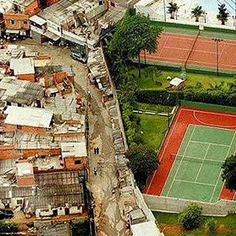
The city as a strategic entity:  Will metropolitan areas become increasingly integrated wholes pursuing policies to benefit urban dwellers, Or will cities be primarily inchoate regions stalemated by interest group based politics?


The availability of food and water:  Will existing food and water supply chains support human activity worldwide, Or will they be increasingly stressed by multiple breakdowns that imperil lives and well-being?


The supply of raw materials:  Will critical raw materials such as rare earths run out, creating havoc with production processes and slowdowns in technological advancement, Or will shortages be avoided through invention, miniaturization, and/or substitution?


Energy sources:  Will the number of viable energy sources supporting human activity proliferate driving down the price of production and transportation, Or will experimentation with non-carbon based forms of fuel prove to be too expensive and unreliable?


Global vs Local production:  Will trends toward the global manufacture and assembly of components parts of all sorts of goods and services continue, Or will regions refocus their concentration on what they are distinctively able to create, manufacture and trade?
Source:  Honda Motor's Assimo


The incorporation of robotics and artificial intelligence into everyday living:  Will robots and expert systems of various kinds take over many of the chores that make human existence unpleasant, Or will the technological utopias that get so much air time turn out to be mere fantasies and no substitute for hard physical and mental work?
 
Man/machine fusion: Will the explosion of computing power, genetics, nano-technology and robotics merge into new life forms, a singularity that will transform the very essence of what it is to be human, Or will these technologies fall short of expectations or be regulated in ways to prevent such a transformation?

Epidemics and treatment:  Will civilization be increasingly faced with wide-spread, fast moving epidemics for which there is no adequate response, Or will invention, innovation and investment master transitory medical threats?


Transparency and privacy:  Will social media and global interconnectivity prove to be a great boon to human inventiveness and productivity, Or will it create a hive environment where no one has privacy, the ability to be alone or the right think independently?


The supply of skilled workers:  Will economic conditions of low consumer demand and diminished horizons create a permanent reserve of highly trained personnel ready to work for low wages for at least a decade ahead or will demographic trends and burgeoning emerging economies and aging industrial ones stretch the supply lines of skilled workers very thin and in surprisingly short order?


Community and individual:  Will individual see themselves as members of a larger community toward which they owe allegiance and responsibility, Or will they think of any group with power as unwarranted and unnecessary constraints upon their own liberty?


Unions:  Is the labor movement dead because it impedes private enterprise, Or will it become revitalized as a result of the growing power of labor in the emerging economies and globalization?


Source:  Reuters 2007
Violence and security:  Will people with opposing interests and objectives increasingly resort to violence against each other leading to an endless cycle of anxiety-laced security measures and retaliatory action, Or  will norms of behavior and civility bring ever-larger segments of the population into self-regulating mutual respect?


Gary "Ironman" Passler, 58


Health and well-being of the aging:  Will the aging population be increasingly unwell and despairing, requiring ever-greater investments in their health and well-being, Or will the aging become more mindful of the need to stay healthy and active with the financial and physical ability to achieve such objectives?


Source of picture: keplarllp.com
Stability of the financial system:  Will central bankers, economists and political leaders agree upon means to achieve and maintain global financial stability, Or will governments prove insufficient to the task and plunge the world economy into an extended era of self-protectionism?


Source:  Thinkstock
Innovation and inventiveness:  Will scientists and entrepreneurs discover and develop new “killer apps” that revitalize global, national and local communities, institutions and organizations, Or are we entering a “me-too” era where investment in research and development will slow down and new ideas be slow to emerge and slower to find acceptance?

From an article by Andrew Wye
Consciousness: Are radically new realizations regarding the human potential, such as mental telepathy or the use of dreams as guides to life, about to break through into common use, transforming the human prospect, Or are these supposed possibilities no more than the hogwash of pseudo-science?

Design integrity:  Will consumers  demand products that are well designed and aesthetically pleasing, Or will price be the primary and, in many cases, the only factor affecting purchasing decisions?


Ataturk/Khomeni
Secularism versus Sectarianism:  In the US, the population is split between those who hold traditionally sectarian views and those who have a secular orientation.  A nearly equal number believe that the Earth was formed according to the biblical description vs those who believe that it evolved according to the scientific view. Proponents and adversaries of abortion and sex education are also in standoff positions.  Will social schisms based on religious and spiritual beliefs proliferate, Or will a new openness emerge mitigating disputes that seem intractable from the present perspective?

Source: Flickr User MakeMoneyMall
Income inequality:  In many societies, including the US, Brazil and China, the gap between the lives of the Haves and the Have-Nots is widening and concern about this bifurcation is increasing.  Will the trend toward greater social and financial inequality continue, Or will the needy manage to overthrow entrenched plutocracies?


Racial and ethnic dynamics:  Diversity, integration and multiculturalism are often lauded as not only moral but as smart business.  Will this view prevail, Or will a will sense of threat from change and suspicion of outsiders–reliable and long-standing human tendencies–endure?
 
Monitoring via electronic skin
Remote care:  Distributed electronics make it possible to treat many health ailments remotely.  This, coupled with innovations such as the ability to make, print and apply new skin tissues and limbs, will create new health care options.  However, many do not to trust technologically-mediated medical approaches due to potential malfunctioning, lack of empathy and judgement, etc..  Will remote care be widely adopted, Or will it remain a relative oddity, full of unfulfilled promise?

Source:  Second Life
The nation state vs. the cyber state:  The internet enables world spanning communities of all sorts.  Very powerful stateless communities may bond in cyberspace with little or no physical location or contact.  Will national governments lose clout as people conduct business and social relationships in cyberspace, Or will there be the sort of continued sense of citizenship and unity of national identity?


Space travel and colonization:  Will the ancient urge of humanity for adventure take it past its planetary boundaries into an never-ending era of exploration, Or will the huge investments required and the fear of a greater unknown than has ever been broached prohibit off-world excursions? 

Thursday, August 25, 2011

Success to the Successful

Calling Steven P. Jobs "one of the most successful chief executives in corporate history," the New York Times today reported that he "once said he never thought of himself as a manager, but as a leader. And his notion of leadership revolved around choosing the best people possible, encouraging them and creating an environment in which they could do great work."  This touches on several themes near and dear to Art of the Future.  Jobs is an anticipatory leader who has been able to integrate his vision into the hearts and minds of everyone in the Apple organization.  Apple attracts top creative talent and retains them through challenging assignments and a supportive workplace environment.  Apple is a great example of a life-sustaining organization.
The NYT article goes on to quote Jobs discussing the role of design integrity and elegant solutions in making the company a success.  "When discussing Silicon Valley’s lasting contributions to humanity, he mentioned the invention of the microchip and 'The Whole Earth Catalog,' a kind of hippie Wikipedia, in the same breath.  Great products, Mr. Jobs once explained, were a triumph of taste, of 'trying to expose yourself to the best things humans have done and then trying to bring those things into what you are doing.'" Anticipatory leaders, like Jobs, have the ability to synthesize information existing in the present, project it forward into the future,  and create the next generation of products and services.   In the past 15 years, Apple has produced a series of "blockbuster, culture-changing hits like the iMac, iPod, iPhone and iPad"- often to the surprise and delight of customers who never dreamed of such things.

As Jobs transitions to Chairman of the Board, the triple play of attention to its people, its products and the environment has endowed Apple with a strong legacy that bodes well for its ability to survive and thrive in the wild and wooly environment we face going forward.  As the NYT puts it, "success begets success. And at this point, few companies have as high a concentration of geniuses — in technology, design and marketing — as Apple. Leaders like the design god Jonathan Ive and the operations mastermind Tim Cook won’t let the company go astray."

Tuesday, January 25, 2011

Life Sustaining Organizations as Talent Magnets

 David Brook's terrific column, "Talent Magnets," appearing in the January 25th, 2011 Op-Ed section of the New York Times deserves attention and appreciation.  Brooks describes a virtuous feedback loop that Anticipatory Leaders can generate by creating conditions in organizations that attract and hold creative talent:  "The nation with the most diverse creative hot spots will dominate the century."
There are many creative centers in the United States.  Take Greenville, North Carolina, for example, a city of about 85,000 people, named one of the nation’s “100 Best Communities for Young People” by America’s Promise Alliance.
Greenville doesn't get a huge amount of press, but it is home to East Carolina University and the site of an excellent medical school, with specialists like Dr. W. Randolph Chitwood, who performed the first mitral valve repair surgery in the United States in 2000.  This far off corner of North Carolina that you probably never heard of is one of the best places in the world to learn robotic surgery.
Our point: While 47% of the US population presently believe that China is the world's largest economy, there is still a tremendous window of opportunity for the planet's leading democracy to demonstrate the competitive vitality of its more open system.
Unfortunately, there are many ways in which the United States is squandering its key advantages in the competition to nurture creative hot spots.  Its children have not learned the fundamentals of science, for example, and this is clearly a weakness to the country's prospects for continued influence as the 21st century unfolds.
A problem in the present doesn't foreclose the prospects of improvements in the future.  In fact, the recognition of a short-coming can incentavize needed change.  Will it in this instance?  U.S. scores in science have been lousy for quite a while; so, that's not a good sign.  But, it could change.  The future of science education and the importance of scientific understanding to educators in the  public school systems is uncertain.
It's a Critical Uncertainty.
In our book, Life Sustaining Organizations–A Design Guide, we show how anticipatory leaders can play an essential role in energizing  organizations and societies by exploring alternative futures.  They do this by asking big questions to which there are a lot of legitimate answers, each one of which can lead to a different kind of future.  "What role will science play in the United States in 2025?" is an example of that sort of question.
Ideally, a set of these questions are looked at simultaneously, like looking at several striations of soil to understand what might grow.
For example, we think that the future of women's rights and political power is a world-wide critical uncertainty.  It's up for grabs and, as others have noted, it's a fundamentally important political, economic and moral issue of our era.  Art of the Future as an entity is four-square in support of women's rights on a planetary basis.  That and $3.50 will buy you a latte at Starbucks.  The rights of women are certainly not guaranteed in a global context where women own less than 5% of the planet's assets. 
The power of women is interacting with many, if not all, dynamics on the planetary stage.  So, what happens with women is going to have a big impact on what happens with science education. Women are key to creative hot spots.  The organizations and the societies that have no problem with that have an advantage over those that do not.  That doesn't mean that they're going to come out on top, it just means that we think they've got a head start.
The future will not look like the past.  The slope of change is dramatically accelerating everywhere.  Thoughtful observers like Ian Morris anticipate that the level of social development that will occur in the next 100 years will equal that which humanity achieved in the last 15,000 years... if we don't kill ourselves first. 
As a species, we may be reaching lift off velocity, moving through an opening that will make the present seem like a very distant past...and, then again, maybe not.  Anticipatory leadership entails helping us explore where we are and what that means for where we might be going.  It is the catalyst for insight and learning.  It requires a willingness to take a real risk.

Wednesday, January 12, 2011

We are pleased to announce...


The publication of our new book,
Life Sustaining Organization–A Design Guide

What is a Life Sustaining Organization?
* An organization that understands itself as a living system embedded in nature
* An organization that looks at the members of its system-whether they are formally employed or informally connected-as agents of the whole
* An organization that cares about its overall well-being, the health of its human representatives, and the vitality of nature in general

Why are they important?
* Complex human systems are shaping the destiny of the planet
* Talented, creative people want to work in organizations that will care about them and the natural environment
* The competition for curious, conceptually agile, life-positive human resources may become incredibly intense in the decade ahead


The purpose of this guide
* To show you how to use Structural Dynamics to analyze the unique conditions of your organization and your industry to design your organization to be extremely attractive to the kinds of people it needs to face the future-whatever it might look like-with confidence
* To support your efforts to be a workplace that fulfills your highest aspirations
* To increase the odds for the survival of human species in an era of discontinuity
Structural Dynamics is an approach to considering the future that doesn't claim to know what's coming but can help us identify what we need to be thinking about. It does this by identifying critical uncertainties that could go in any direction, and, by doing so, set the future on a course.
A critical uncertainty is something that is very important, but whose direction is not clear. As Esher's print of Night and Day© demonstrates, where things are headed is dynamic: the same set of factors and forces can interact toward starkly different, even if related and symmetrical, outcomes. In our work, we look for forces that everyone sees as fundamental to the well-being of their organization or to the situation of interest but around which there is a lot of disagreement or confusion.
Understand the nature of your critical uncertainties to set an path for organizational adventure and achievement. Miss them and court failure and worse.

Unique features
* A richly illustrated, step-by-step description of the structural dynamics process with an extensive case study showing how to apply each element of the approach to a specific organizational setting
* Self-assessment instruments to help you understand where your organization stands at present as a life-sustaining organization
* A discussion of how Anticipatory Leaders develop and practice powerful skills as Integrators, Futurists and Strategists
* An exploration of the Scenario Game Board© at the heart of Structural Dynamics that demonstrates how to use combine systems thinking with archetypal scenarios to strengthen your organization's strategic capabilities Game Board

Who is the Audience?
Leaders, executives, strategists, ecologists, advisers, radical thinkers, policy makers, idealists, academics and anyone who wants to make a positive difference to their organization's prospects

The Authors
Michael Sales and Anika Savage founded Art of the Future five years ago to support organizational vitality.  Anika is an architect, corporate strategist and consultant with wide ranging experience in technology and finance. Michael is a leadership trainer and strategy consultant who has worked across a wide variety of economic sectors.  Life Sustaining Organizations represents the culmination of their individual and collective study of organizations over an extensive range of experiences.

Wednesday, December 30, 2009

Critical Uncertainties: Pivot Points for the Future

In spite of the fulminations of the best prognosticators, futurists, pundits and astrologers, no one really knows what the future is going to bring. We all want some things to happen and we probably don't want other things Parallel Worldsto happen, but our ability to bring things about is limited. The world is an infinitely complicated place. In fact, as if matters weren't already confusing enough, string theory and quantum physics is positing that ours may be but one of an infinite number of universes including a full-blow version that may be a bubble tangential to the one we are in right this moment!

Structural Dynamics is an approach to considering the future that doesn't claim to know what's coming but can help us identify what we need to be thinking about. It does this by identifying critical uncertainties that could go in any direction, and, by doing so, set the future on a course.

A critical uncertainty is something that is very important, but whose direction is not clear. As this Escher print of Night and Day demonstrates, where things are headed is dynamic: the same set of factors and forces can interact toward starkly different, even if related
Esher's Night & Day and symmetrical, outcomes. In our work, we look for forces that everyone sees as fundamental to the well-being of their organization or to the situation of interest but around which there is a lot of disagreement or confusion.

Through a process that involves scanning, discussion and voting, each organization arrives at its own conclusions regarding its particular critical uncertainties. We would expect the uncertainties of the utility industry to be different than those faced by a professional nursing association, for example (although we have found commonalities in exploring the question!).

Ron Heifetz and others have pointed out the powerful learning opportunities that come from probing the thinking and worldviews of
people, groups and institutions who hold strong conflicting views and, yet, have a degree of respect for each other. The process that leads up to the identification of critical uncertainty legitimates these diverse perspectives, so it is an excellent way for leaders to facilitate strategic conversations that generate organizational and social movement.

Typically, an organization or a community will confront a number of these critical uncertainties simultaneously. Discovering them and exploring their interactions is a way of developing very rich scenarios of possible futures. This allows the building powerful organizational and community strategies. Critical uncertainties are like fulcrums, and the organization that sees where the leverage points are is in a position to take advantage of its insight and foresight to attract and hold the key talent it needs to thrive in whatever future unfolds.

There are a number of macro critical uncertainties that all human systems face, and knowing what these are is a way of considering the dynamics of the world system as a whole. Much hangs in the balance on the spinning of these particular wheels.

Here are some that we've been thinking about:
  • The rights and power of women worldwide
  • The impact of climate change
  • The mix of public and private power
  • The internationalization of law
  • The level and type of educational achievement
  • The city as a strategic entity
  • The reliability of food and water supply
  • The availability of raw materials
  • The introduction of robotics and artificial intelligence into everyday living
Of course, there are probably other drivers that come to your mind immediately and there may be factors mentioned in this list that don't seem all that uncertain or important, but, hey, it's our list and we're sticking to it!... (At least for now!)

Let's explore a couple of these briefly to see why they qualify as critical uncertainties out book:

The power and rights of women: Many educated people in the
West assume that women's rights are expanding in an inexorable fashion. Women are serving at virtually every level of government, e.g., Chancellor Merkel in Germany and Hillary Clinton as the US Secretary of State. Academic achievement by women is outpacing men in a number of countries, including the United States and Algeria. Female athletes are setting strength and endurance records and entering sports that were once off-limits. The list of these sorts of achievements is very long. Women seem unstoppable!

However, the forces opposing the equality and power of women start at birth. Multiple studies demonstrate that the preference for male children is virtually universal. In India, a special "ladies train" has been created for women administrative workers to provide them with protection from the harassment they experience when commuting with male passengers, but men still get on the women's train and berate them. In
Iran, Guinea, and countless other societies, women are the particular target of angry men working to maintain the power of established governments, which frequently lace their ideology with religious doctrine that specifies a subservient position to women in the social and family order. Orthodox Jews yell at women seeking to pray at the Wailing Wall and throw things at them; Southern Baptists assert that women must submit to their husbands. Catholicism remains adamant in the view that women cannot and will not serve as priests.

Seen from the perspective of these data, the expansion of women's rights do not appear to be guaranteed in any respect. In fact, a female colleague of ours wonders if the last decade hasn't seen the zenith of the power of women, and whether ten years from now we might not see a much more rigid set of conditions than we do at present. Misogyny and traditional views on the role of women are alive and very well, thank you!

So, there is a powerful dynamic tension between these expansive and contracting forces. Whatever way the story works out, the condition of women's right is and will have incredible impact on all work organizations. How a particular organization positions itself vis-a-vis this tectonic tension and how it makes its stance clear will have a major impact on its attractiveness to women and the role that women will play in shaping its future.

The city as a strategic entity: While we haven't seen him in a long time, Jeb
Brugmann is a deeply respected colleague and a friend. His Urban Revolution is a recent contribution that builds upon his decades as a global citizen, describing a range of solutions to help local communities access the benefits of globalization, and to help global organizations engage in local communities and markets. Jeb lays out the success of a number of "strategic cities," including Barcelona, Chicago, and Curitiba, Brazil, in galvanizing the true and stable elites of a city--not necessarily its most well-to-do, but the people who constitute the metropolitan areas local leadership and community networks--to develop and implement innovations that put those places out front while other cities founder.

In other words, Jeb is a member of the professional urban planning and development community, which has long sought to influence cities to be rational entities pursuing the best interests of a maximal number of its citizens. And, of late, very powerful technologies, such as the Smarter Cities initiatives at IBM, are being brought to bear on the conditions of large metropolitan areas in ways that seem to be full of hope for improvement in the functioning of urban life. When one sees crime in New York City falling to levels not seen in forty years, there is reason to believe that the quality of urban life might be moving toward a positive tipping point.

On the other hand, the problem with this strategic orientation is that cities are continuously rent asunder by a phenomenal range of forces that can make them absolutely hellish places to live. Overcrowding, poor infrastructure, inadequate resources, crime, lack of housing, social/political/ethnic hierarchies and tradition, pollution, suspicion, architectural and topographical barriers to communication and interaction, etc. all make cities places where people look out for themselves and their own.

According the United Nations, 60+% of the world's population is now living in cities, including 19 cities with more than 10,000,000 inhabitants. Furthermore, the UN asserts that 100% of the world's population is linked in to urban life, so that's about as critical as any critical uncertainty is going to get! The status of cities is key to the life-sustaining quality of the millions of organizations that reside within them and depend upon them.

So, what is going to happen with cities? Again, the crystal is murky: Global interconnectivity, the press of common problems and an onslaught of new thinking could usher in a new, much more strategically-focused era; on the other hand, long-standing animosities, the sheer weight of a seemingly endless number of problems, the press of other concerns could take the city deeper into the pit of dysfunctionality. The future of cities is very important, but it's absolutely not predetermined.

We believe that this kind of analysis could be applied to each of nine domains listed above (and probably more). The organization and the leaders who are seeing and using "big picture" forces such as these to build their strategy, in general, and their work environment strategies, in particular, will be way out in front of those who assume that tomorrow will be like yesterday or that whatever comes along will be manageable through the existing repertoire of behaviors and mental models.